Your feet and calves do an enormous amount of work every single day and almost nobody pays attention to them until something hurts.
Standing for hours, walking on hard surfaces, sitting with poor circulation, wearing shoes that compress and restrict – it all adds up. The result is tight calves, aching arches, stiff ankles, and that deep foot soreness that makes the first few steps out of bed in the morning feel like a negotiation.
The good news is that the feet and calves respond really well to targeted stretching. The muscles down there are accessible, the movements aren’t complicated, and the relief can be noticeable quickly when you address the right areas consistently.
This session works through a sequence of stretches specifically for the feet, ankles, and calves – the kind of targeted work that most yoga classes move through too quickly to get much benefit from.
Why Feet and Calves Get So Tight
The calf muscles – primarily the gastrocnemius and soleus – run from behind the knee down to the heel via the Achilles tendon. When they’re tight, the tension pulls on the heel, strains the arch, and affects everything from ankle mobility to knee and hip alignment.
The feet themselves contain 26 bones, 33 joints, and over a hundred muscles, tendons and ligaments. They’re complex and they’re load-bearing, which means tightness and weakness in the feet has a way of traveling upward through the whole body.
A few of the most common contributors to foot and calf tightness:
- Long periods of standing or walking on hard surfaces
- Shoes with limited toe box space or elevated heels – including most athletic shoes
- Sitting with feet flat on the floor for hours with limited circulation
- Running or intense lower body training without adequate recovery stretching
- Plantar fasciitis – inflammation of the connective tissue along the arch – which is often preceded by chronic calf tightness
Watch the Sequence First
Scottie walks through the full foot and calf sequence below. Watch it through once before you start so you know where you’re headed.
7 Stretches for Foot and Calf Relief
Work through these in order – they build on each other progressively. Hold each stretch for the time noted and breathe steadily throughout.
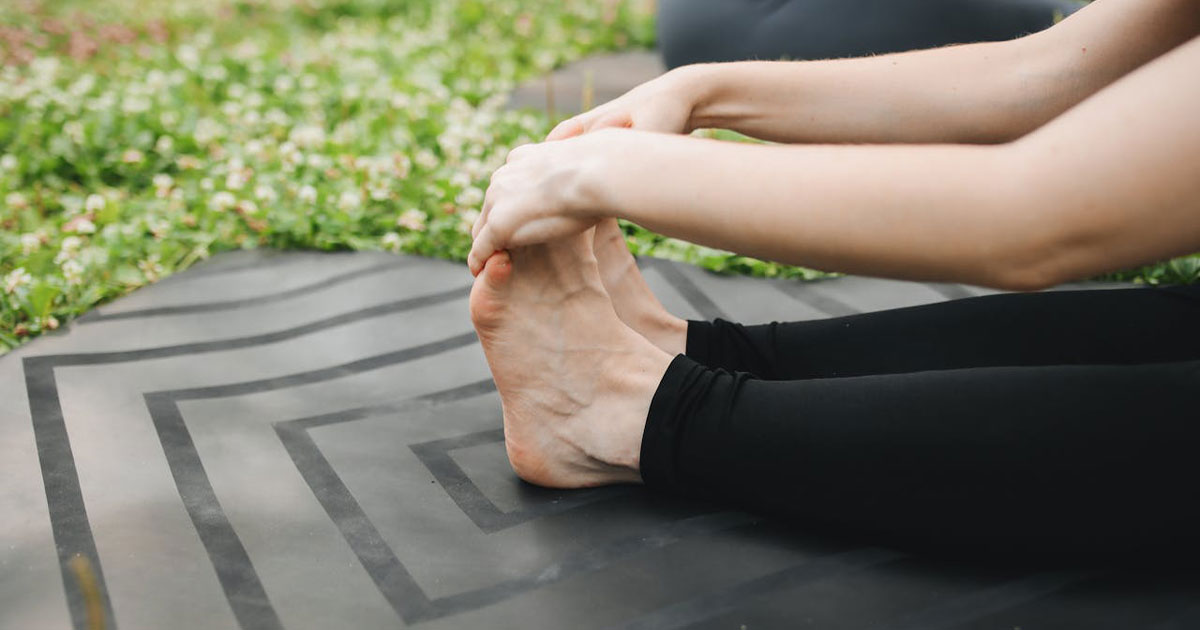
1. Seated Toe Stretch Sit on your heels in a kneeling position with the tops of your feet flat on the mat. Sit tall and let your body weight create a gentle stretch through the tops of your feet and ankles. Hold for 5-6 breaths. If this is intense right away that’s useful information – your feet need this more than you realized. Use your hands on the floor beside you to take weight off if needed.
2. Toes Tucked Stretch From kneeling, tuck your toes under so the balls of your feet are pressing into the mat and your heels are lifted. Sit back gently toward your heels. This stretches the plantar fascia and the undersides of all ten toes simultaneously. Hold for 5-6 breaths. This one is intense for most people – ease in slowly.
3. Standing Calf Stretch – Straight Leg Stand facing a wall with your hands pressed against it at shoulder height. Step your right foot back about three feet and press your right heel firmly into the floor. Keep your right leg straight and lean your weight gently forward. You should feel a deep stretch through the center of your calf. Hold for 6-8 breaths. Switch sides.
4. Standing Calf Stretch – Bent Knee From the same position, keep your right foot back but this time bend your right knee slightly while still pressing the heel down. This shifts the stretch from the gastrocnemius to the soleus – the deeper calf muscle that often gets missed. Hold for 6-8 breaths. Switch sides. If you only ever do one calf stretch do both of these – they target different muscles.
5. Downward Dog – Calf Pedaling From a tabletop position, tuck your toes and lift your hips into Downward Facing Dog. Pedal your feet slowly – pressing one heel toward the floor while bending the other knee, then switching. Move at the pace of your breath, 8-10 rounds. This works both calves dynamically and also gives the Achilles tendon a gentle moving stretch.
6. Standing Foot Roll If you have a tennis ball, golf ball or foam roller available place it on the floor and stand with one foot on top of it. Apply gentle pressure and roll slowly from the heel to the ball of the foot and back. Spend extra time on any areas that feel particularly tight or tender. 60-90 seconds per foot. No ball? Use your thumbs seated to press along the same pathway on the arch.
7. Ankle Circles and Toe Spreads Sit comfortably and lift your right foot off the floor. Circle your ankle slowly 8 times in each direction. Then spread your toes as wide apart as possible – hold for 3 breaths, release, repeat 3 times. Switch feet. This sounds simple but most people have almost no mobility in their toes from years of wearing shoes. Building it back matters for foot health and balance.
A Few Things That Help Beyond Stretching
Go barefoot when you can. Walking barefoot on natural surfaces – grass, sand, carpet at home – allows the small muscles of the foot to activate and strengthen in ways they can’t inside shoes. Even 15-20 minutes a day makes a difference over time.
Check your footwear. Shoes with a narrow toe box compress the toes together and prevent the natural splay that the foot needs for proper function. If foot pain is chronic, footwear is worth examining before anything else.
Elevate in the evenings. If your feet and calves are tired and swollen after long days on your feet, 10-15 minutes with your legs elevated – even just lying with your feet propped on a pillow – helps circulation and reduces inflammation significantly.
Consistency beats intensity. The foot and calf sequence in this post takes about 12 minutes. Done three or four times a week it will produce noticeable change within two to three weeks. Done once when things get bad it won’t.
Keep Going
Foot and calf tightness is often connected to tension higher up the chain. If tight hamstrings or hips are part of the picture the yoga stretches for tight hips addresses the hip and hamstring side of the equation. And if you’re spending long hours at a desk or on your feet all day the chair yoga routine keeps the whole body moving throughout the day rather than letting tension build up until it becomes pain.
Take care of the foundation. Everything above it will thank you.